Talentuur Microbit
This year I taught a talentuur about the BBC micro:bit. Just like last year with Python, I wanted to introduce students to programming, but this time focused on practical hardware projects. In 3 lessons, participants will learn about programming and electronics through the micro:bit.
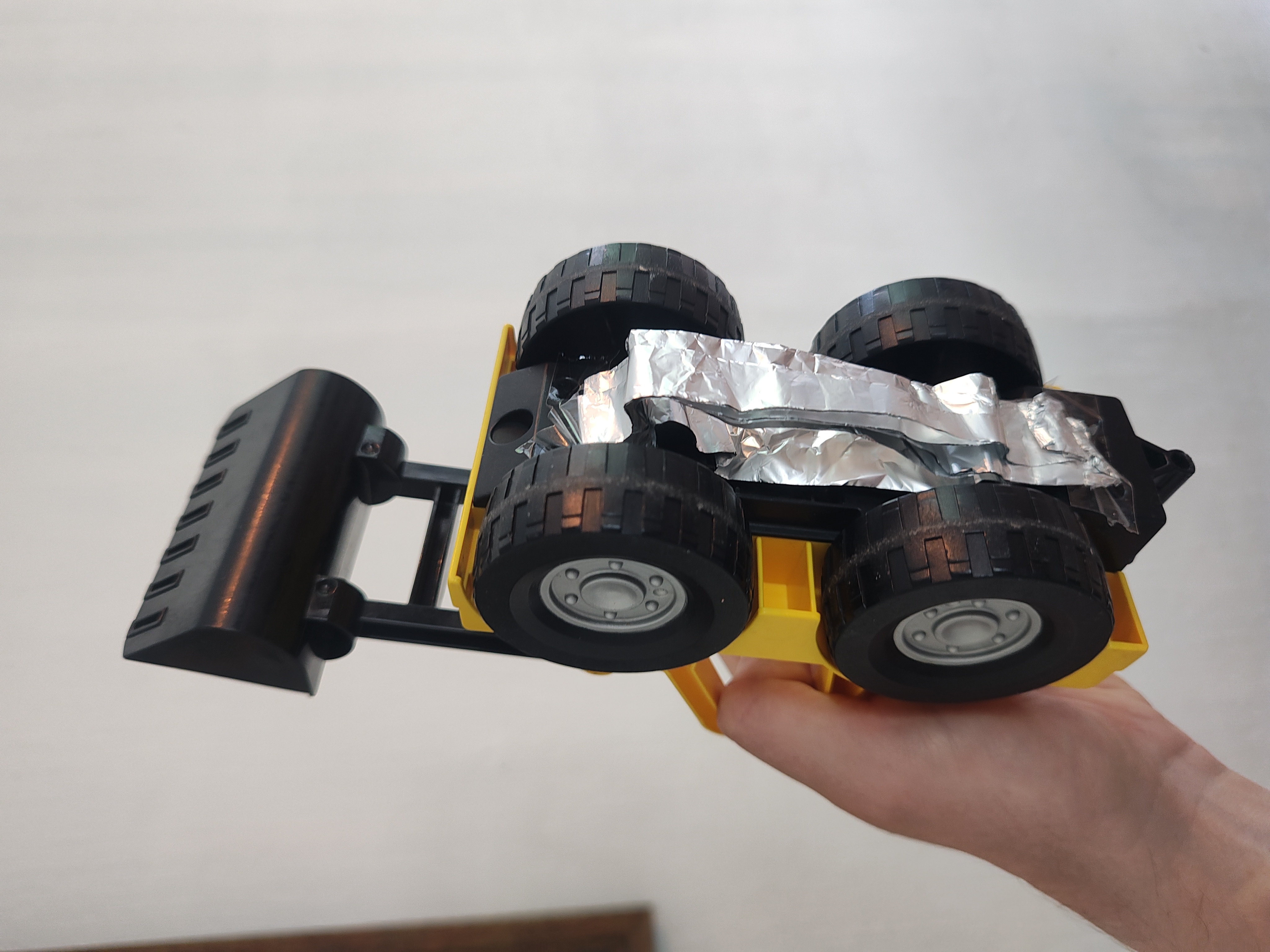
In lesson 1 we focused on the basics of how to program the microbit by creating a nametag and a step counter. In lesson 2 we collected data and trained a simple AI model to recognize activities similar to a fitness tracker, and in lesson 3 we measured the speed of a toy car by creating electrodes on a sloped track and measuring the time it took for the car to pass through them. When asked at the end of the course what they liked best, most students liked the second and the third lesson the best. The first lesson is important though because otherwise they will not be able to do the projects in the second and third lesson.
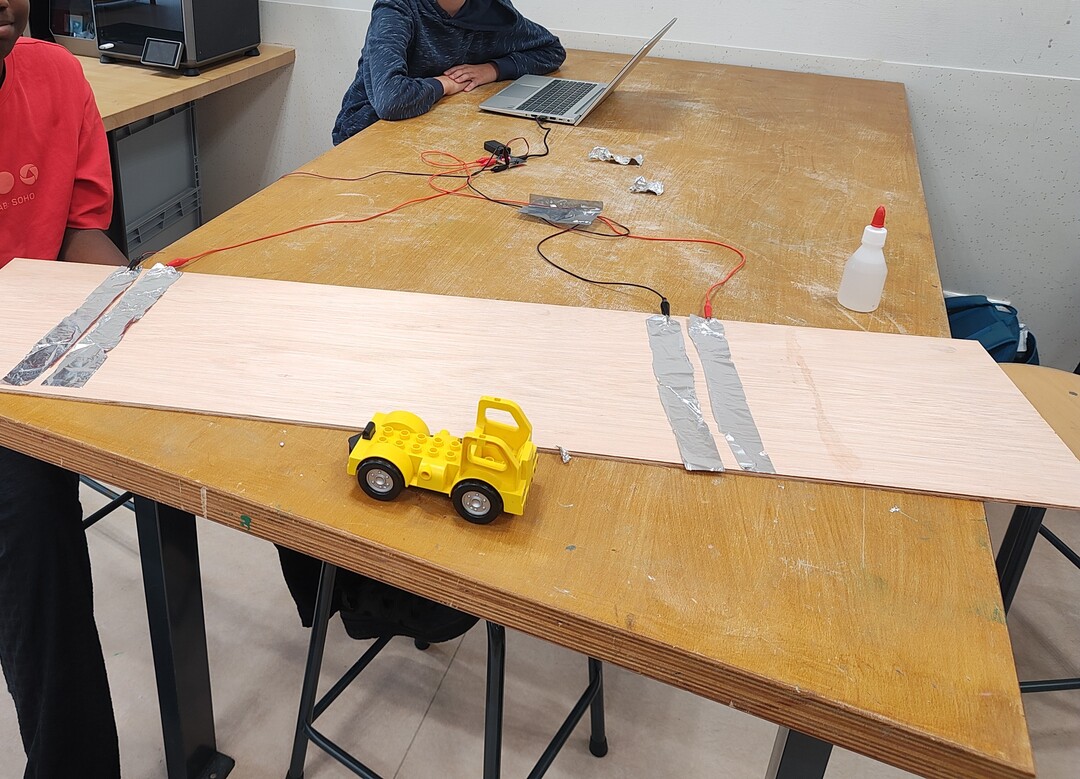
Two students with their track from lesson 3
It was fun to teach this course. There were 9 students, around 13 years old, participating in 3 duos and one trio. The students were overall enthusiastic and creative. They were a bit distracted by the fact that the microbit could also make noise, and you could draw some less-than-appropriate doodles on them using the LED matrix. Even with so few students it was a challenge to answer all the questions and help them through the projects. Next time I will try to prepare a bit better by maybe printing out instructions instead of linking to the online instructions.